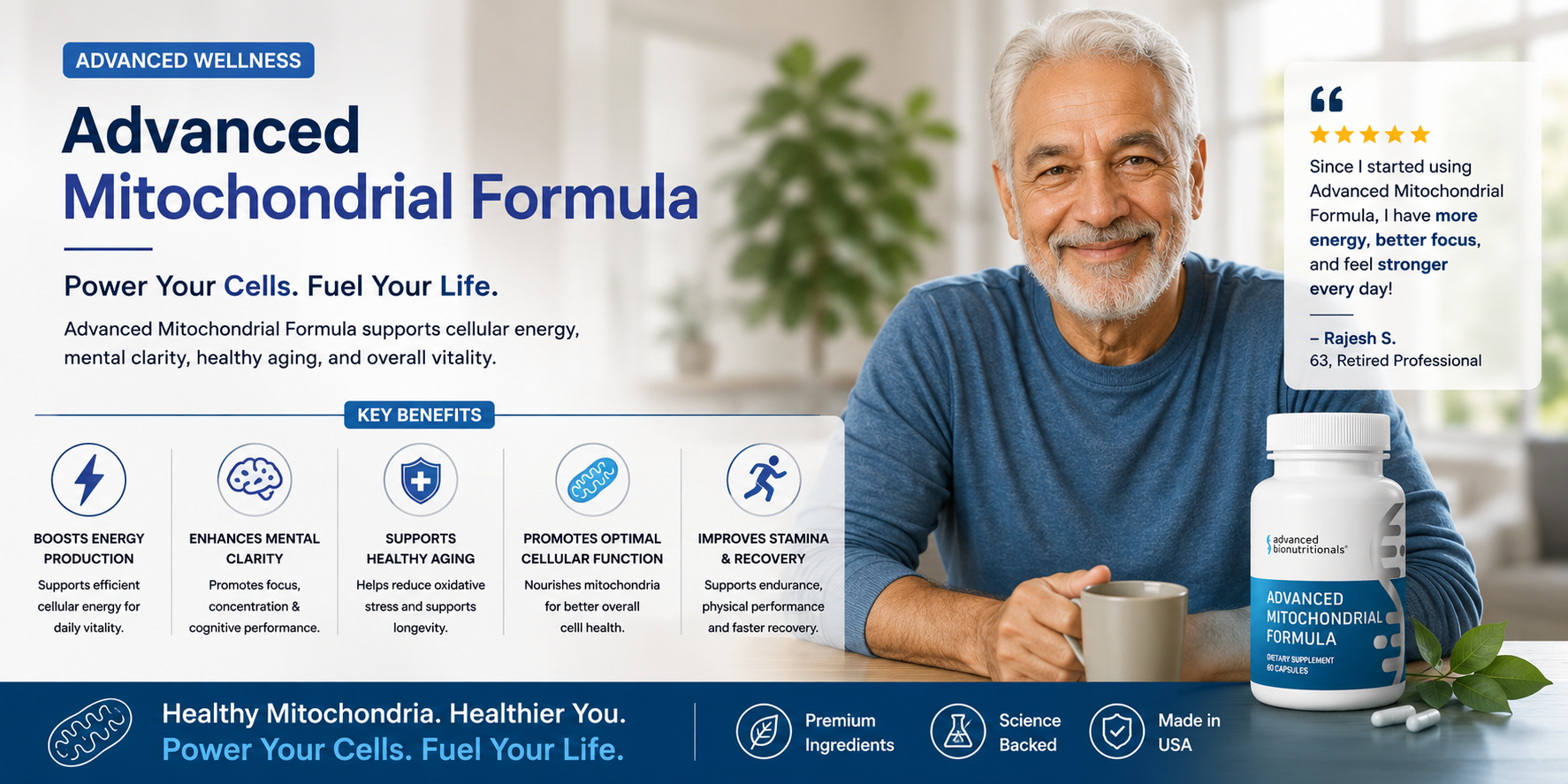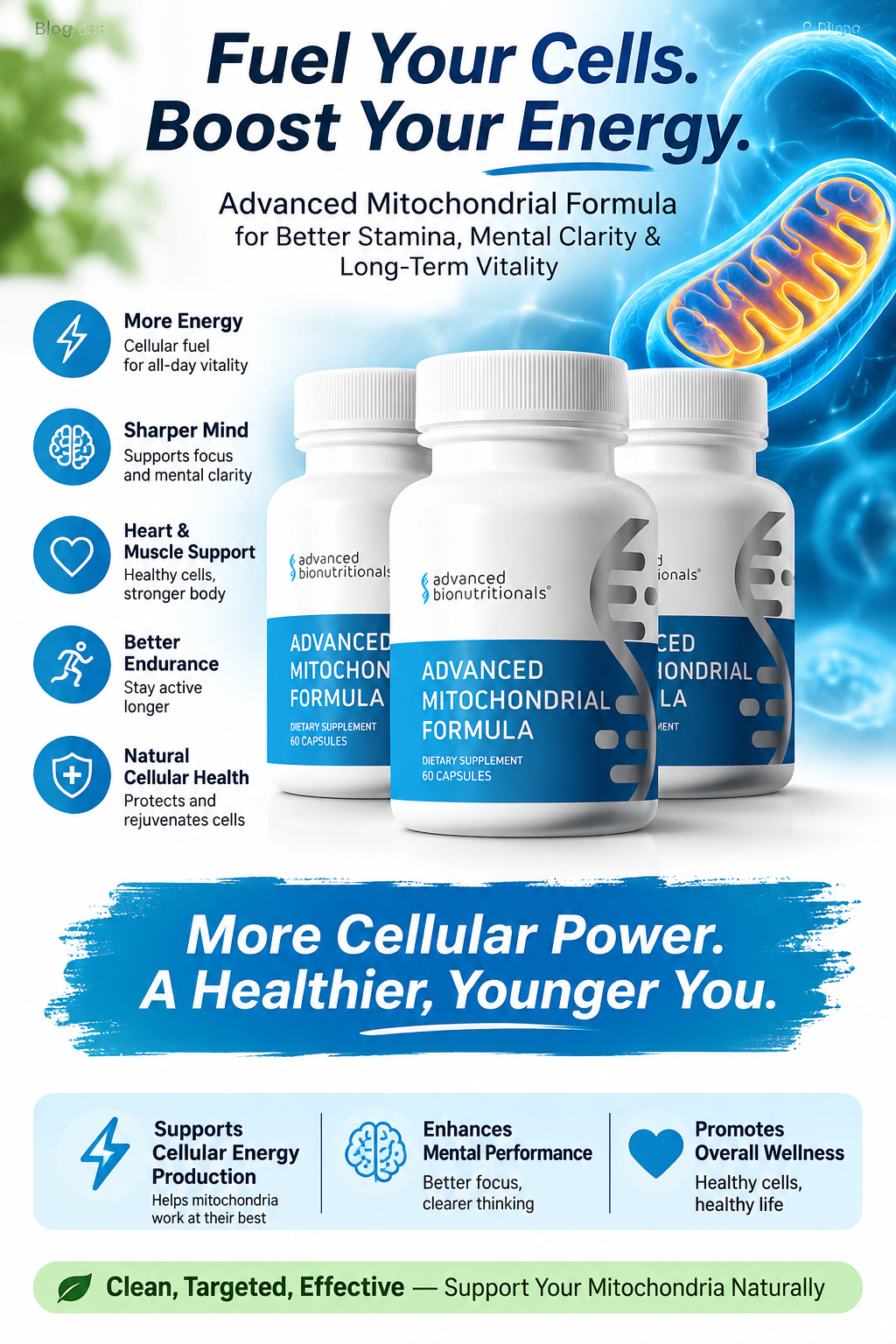
"Mitochondria" is one of those biology-class terms that turns out to matter a lot more once you're past 40 and wondering where your energy went. Here's a plain-English explanation of what they are and why they're worth paying attention to.
What Are Mitochondria?
Mitochondria are tiny structures inside nearly every cell in your body, often described as the cell's "powerhouses." Their main job is converting nutrients from the food you eat into ATP (adenosine triphosphate) — the molecule your cells actually use as fuel for everything they do.
Why Mitochondria Matter for Energy
Every process in your body that requires energy — muscle contraction, thinking, even basic cell repair — ultimately draws on ATP produced by mitochondria. Cells with high energy demands, like muscle and brain cells, are especially packed with mitochondria. When mitochondrial output declines, the effect isn't localized; it's felt broadly, as general fatigue and sluggishness.
Why Mitochondrial Function Declines With Age
As we age, mitochondria can accumulate damage from oxidative stress, and the body's rate of producing new mitochondria — a process called mitochondrial biogenesis — tends to slow. Fewer, less efficient mitochondria mean less cellular energy output, which is a meaningful contributor to age-related fatigue.
Signs of Declining Mitochondrial Health
- Persistent fatigue that isn't explained by poor sleep alone
- Slower recovery after physical activity
- Reduced stamina and endurance
- A general sense of sluggishness that coffee only masks temporarily
Support your mitochondria with a targeted daily formula.
Order Advanced Mitochondrial FormulaSupporting Mitochondrial Health
The encouraging news: mitochondrial function isn't purely a fixed decline. Regular physical activity, adequate sleep, and specific nutrients have all been associated with supporting mitochondrial function. See our guide to boosting energy naturally for a practical starting point.
Key Nutrients for Mitochondrial Support
Several nutrients are specifically associated with mitochondrial health, including PQQ (which is linked to signaling the production of new mitochondria), CoQ10, and Acetyl-L-Carnitine. These are the core ingredients behind Advanced Mitochondrial Formula, formulated specifically to target this system.